
 Port Authority of New York and New Jersey, Flickr, CC BY-NC-ND 2.0
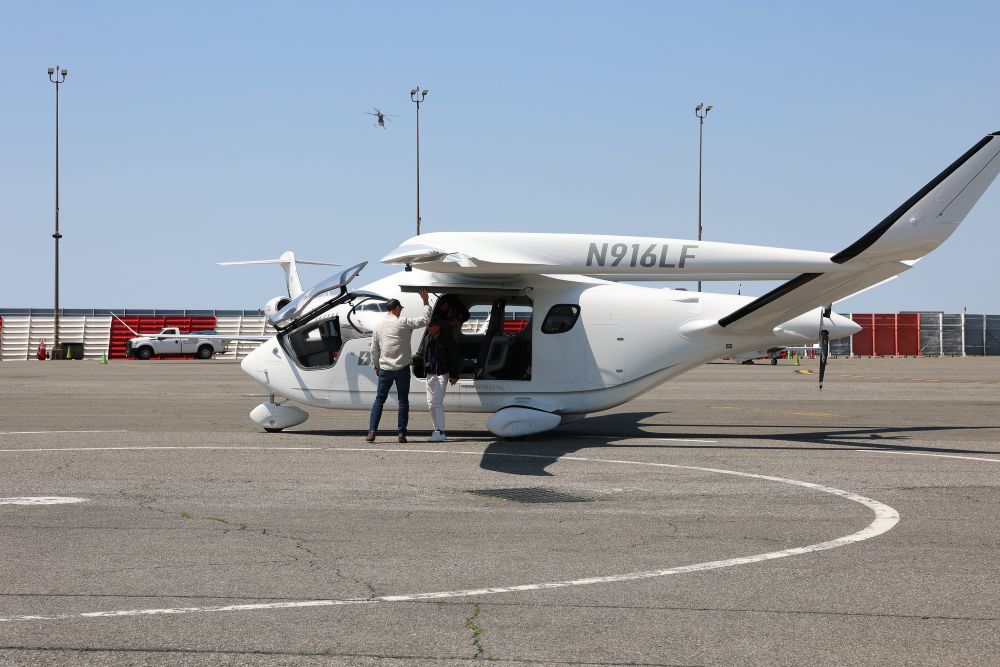
On a sunny morning in June 2025, an odd-looking aircraft with a single rear propeller quietly touched down at New York’s John F. Kennedy (JFK) International Airport and taxied into history. The first passenger-carrying electric plane to land at a large commercial airport had traveled about 70 miles. Yet its brief journey—the culmination of years of research collaborations that had included a barnstorming tour of 80 cities in 26 states a few months earlier—showcased just how rapidly advanced air mobility technologies are evolving and offered a glimpse of the future of flight.
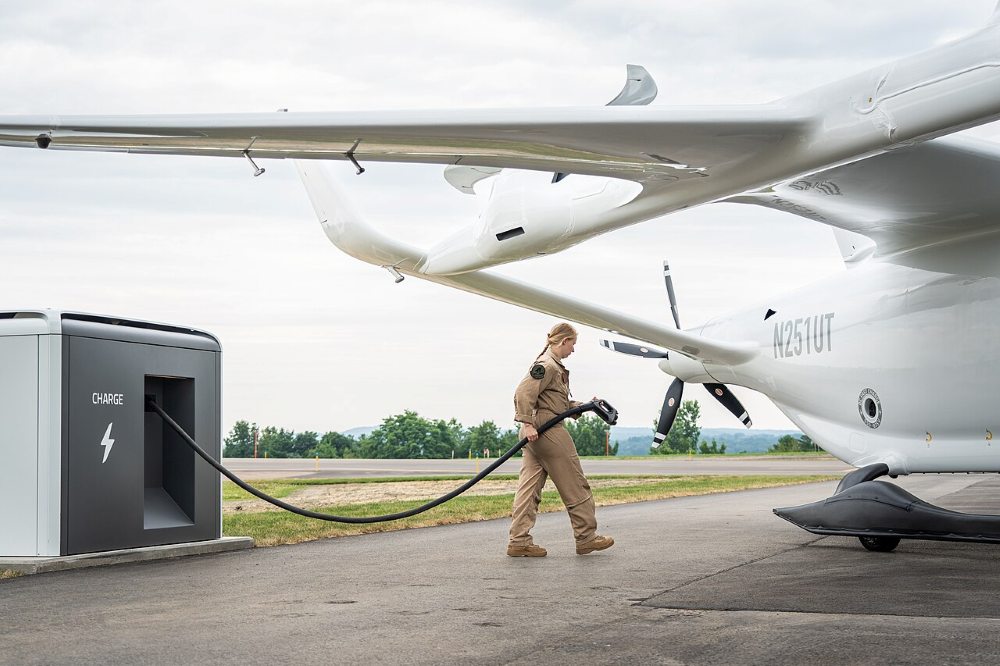
Flying cars may not whisk families around town anytime soon, like they did in The Jetsons cartoon series. But after decades of experimentation, electric-powered aircraft appear increasingly ready for takeoff. This past spring, for example, California-based Joby Aviation conducted point-to-point demonstration flights of its prototype electric vertical takeoff and landing (eVTOL) air taxis at heliports in New York City—a potential launch site for its envisioned rideshare service. Beta Technologies, the Vermont company whose ALIA CX300 electric plane conveyed four passengers from East Hampton, New York, to JFK International in 2025, also oversees a growing nationwide network of chargers. Both firms have partnerships with commercial airlines.
 Brian Jenkins, Wikimedia Commons, CC BY-SA 3.0
A new federal initiative aims to accelerate those efforts. In March 2026, the U.S. Department of Transportation (U.S. DOT) and FAA announced the selection of eight proposals for the Advanced Air Mobility and eVTOL Integration Pilot Program that had been introduced the previous September. Projects range from developing autonomous commercial cargo aircraft to serve Albuquerque, New Mexico, and neighboring rural states to the creation of a statewide electric air taxi medical transportation system led by the North Carolina Department of Transportation (DOT).
Utah DOT is heading a five-state coalition of industry partners; academic research institutions; and agencies in Arizona, Idaho, Oklahoma, and Oregon to test eVTOL technologies for travel, cargo delivery, and medical response in snowy, mountainous environments, as well as hot, dry deserts. Among the goals: Integrate electric air taxis into Utah’s transportation system in time to offer rideshare service for the 2034 Winter Olympics.
Other countries have similarly ambitious efforts underway. A pilotless eVTOL developed by a Chinese company, for instance, carried passengers around Bangkok, Thailand, in recent field tests. And a Canadian company is seeking certification to commercially operate a fully electric seaplane—a retrofitted de Havilland DHC-2 Beaver—that has shown success in test flights since 2019.
The appeal of electric aircraft goes beyond relieving urban congestion or improving parcel delivery. Electric planes are quieter than conventional planes—a key point for transportation planners seeking public support for building or expanding landing hubs and other facilities. They are also much less expensive to operate than conventionally fueled aircraft, and their systems and components often are easier to maintain—which could help bring down the cost of flying. The Beta Technologies flight to JFK International, for example, used about $8 in electricity, according to the company. The ability of eVTOLs to take off and land vertically could have economic development benefits for rural communities served by small or regional airports, such as allowing businesses to bypass congested roads when shipping goods or generating local jobs building vertiports and other infrastructure.
Many challenges remain before hailing an electric air taxi rideshare becomes as commonplace as hopping on an e-scooter. Some are technical, such as battery longevity. Others involve building infrastructure and public support. NASA researchers are already tackling one of the most critical challenges: how to safely integrate electric aircraft technologies into urban and national airspaces, as well as manage the resultant air traffic.