

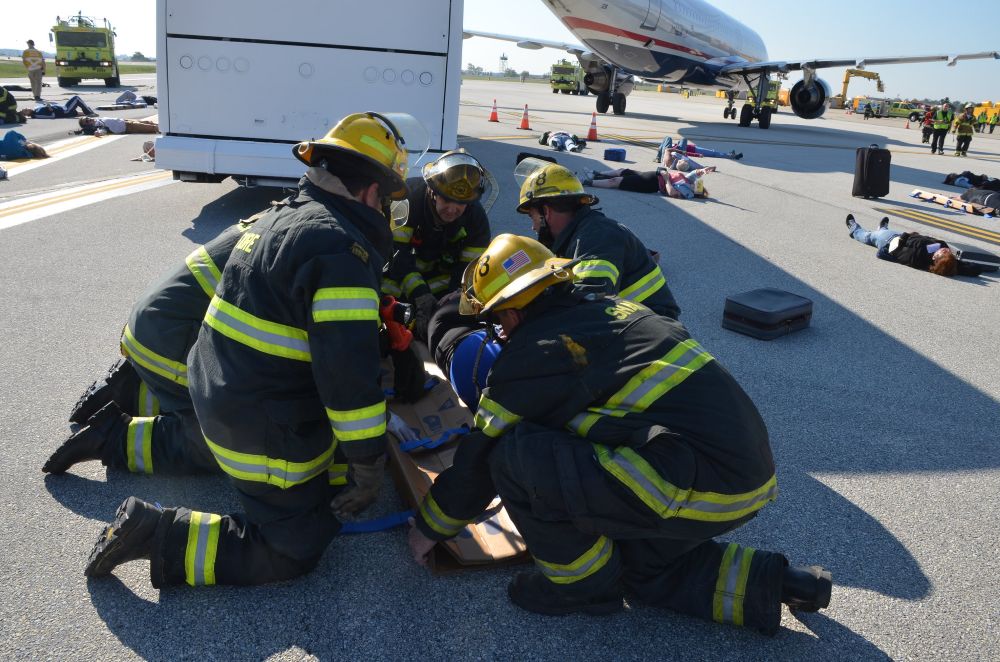
 Philadelphia International Airport, Flickr, CC BY-ND 2.0
Airports are required to maintain an Airport Emergency Plan (AEP) under federal regulations (14 CFR, Part 139). However, many find the standard AEP to be a difficult, unwieldy, or insufficient document for actual emergency responses. To address these shortcomings, airports have developed innovative practices that supplement the AEP with more actionable, all-hazards plans and tools. These practices, highlighted in Airport Cooperative Research Program (ACRP) Synthesis 115: Practices in Airport Emergency Plans, include creating addenda with hazard-specific procedures, conducting gap analyses, fostering strong stakeholder collaboration, and implementing robust training programs and exercises. By adopting these proactive measures, the synthesis concludes, airports can enhance their preparedness, improve response and recovery efforts, and better align their AEPs with modern emergency management principles.
Plan Evolution and Challenges
The AEP’s modern form is a direct result of historic events and regulatory changes. Following the 1985 crash of Delta Flight 191 at Dallas–Fort Worth International Airport, the National Transportation Safety Board recommended significant changes to emergency planning. That led the FAA to release Advisory Circular 150/5200-31 in 1989. This circular mandated that certain airports maintain an AEP and conduct a full-scale exercise every 36 months. Subsequent versions, particularly Advisory Circular 150/5200-31C in 2009, introduced the National Incident Management System and the Incident Command System to align airport response with broader public safety protocols. The AEP format recommended by the 2009 circular includes a basic plan, functional annexes, hazard-specific sections, and standard operating procedures. However, this structure has been described by some as overly prescriptive, cumbersome, and rigid.
A significant challenge identified in the synthesis—which included data from an online survey of airport representatives—is that many airports view the AEP as a compliance document rather than an actionable tool. Many survey respondents (57 percent) indicated that their AEP is not used operationally during an incident because it is too large, lacks sufficient detail, or is outdated. The process of updating the AEP is also a major hurdle. It can take months—sometimes more than a year—and often involves a lengthy executive review process. This slow approval cycle means the AEP may not reflect the airport’s current operational reality, leading to a disconnect between the written plan and actual response procedures. Furthermore, many airports reported that the AEP focuses disproportionately on airside events (i.e., incidents that occur on ramps, runways, airfields, or air operations area), neglecting landside and terminal incidents—for example, shelter-in-place events such as an active assailant, cyberattack, fire, or tornado—which are a growing concern.
Novel Responses and Supplemental Plans
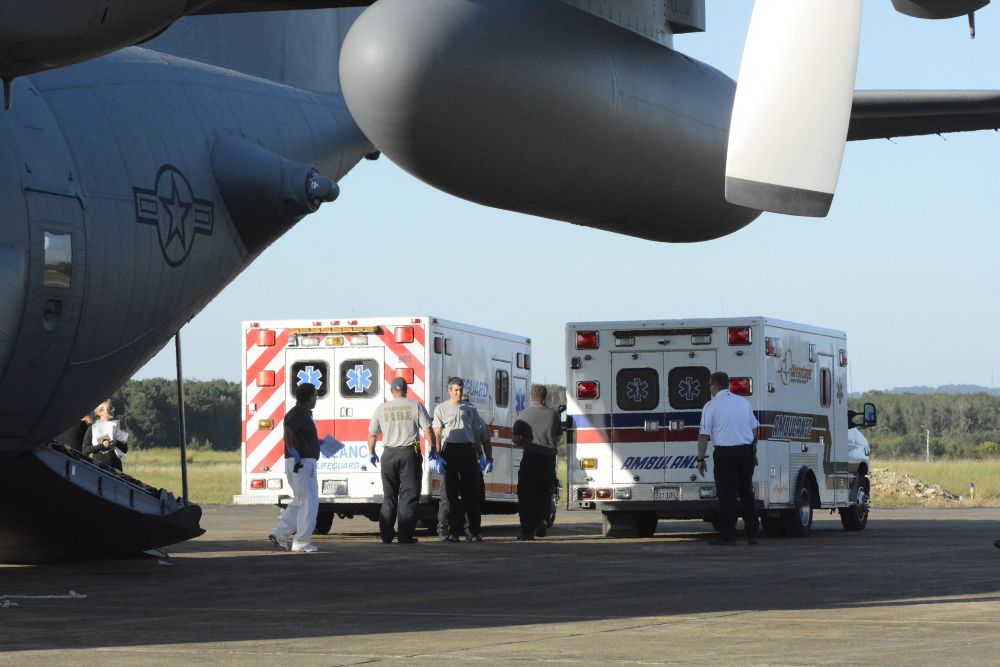 Senior Airman Sonia Clark, North Carolina National Guard, CC BY 2.0
To overcome the perceived limitations of the standard AEP, airports are developing creative, much more detailed supplemental plans. The core strategy is to maintain the AEP at a regulatory-compliant level while creating documents for specific hazards or functions. These supplemental plans—often called annexes, standard operating procedures, or stand-alone plans—are tailored to the airport’s individual needs. The synthesis provides numerous examples of these innovative plans, including the following:
- Hazard-specific plans: active assailant, severe weather, hurricane preparedness, and communicable disease plans.
- Functional annexes: terminal evacuation, business continuity or continuity of operations plans, and family assistance plans.
- Operational tools: checklists, quick reference guides, and stakeholder books that condense critical information for use in the field or the airport’s Emergency Operations Center.
For example, Fort Lauderdale–Hollywood International Airport in Florida developed an umbrella system AEP that consolidates numerous plans into one document, with key annexes such as a hurricane preparedness manual and rapid recovery plan. After experiencing an active shooter incident, the airport also created a terminal evacuation plan, which was a direct result of lessons learned from the event. Harry Reid International Airport in Las Vegas, Nevada, created quick reference guides and checklists to provide new airlines and partners with an easy-to-digest summary of AEP information, addressing the challenge of the main document’s size and complexity.
Stakeholder Engagement
Effective AEP development and implementation are heavily reliant on collaboration with both internal and external stakeholders. Survey results show that the most common success story in AEP management is robust stakeholder engagement. However, this is also cited as an enduring challenge because of issues such as a lack of participation, competing priorities, and high turnover rates in partner organizations.
To overcome these obstacles, airports are being proactive. Successful practices include the following:
- AEP review committees: Multidisciplinary groups that meet regularly to discuss AEP updates and lessons learned, providing diverse perspectives and fostering buy-in.
- Road shows: Emergency managers who visit stakeholders at their locations to discuss the AEP directly, clarifying roles and building relationships.
- Engagement with experts: Inviting subject matter experts, such as public health officials from the Centers for Disease Control and Prevention, to speak to stakeholder groups about specific plans, such as a communicable disease response plan.
- Formalized onboarding: Providing new stakeholders with binders, Emergency Operations Center tours, and one-on-one meetings to introduce them to the AEP and their responsibilities within it.
These efforts are essential because an AEP is only as effective as the airport community’s understanding and acceptance of it. By actively involving airlines, law enforcement, fire departments, and local emergency management agencies, airports can ensure their plans are comprehensive and well-coordinated.
Training, Exercises, and Lessons Learned
Training, testing, and validation are crucial for turning a static document into a dynamic and effective operational tool. The FAA requires an annual AEP review and a full-scale exercise every 36 months. However, the synthesis reveals that many airports go beyond these minimums, incorporating the AEP into more frequent tabletop exercises, drills, and workshops. A key finding is the universal practice of conducting after-action reports and improvement plans after exercises and real-world incidents. This process is vital for capturing what went well, identifying gaps, and developing corrective actions. The 2018 Horizon Air aircraft theft and crash at Seattle–Tacoma International Airport serves as a prime example of this practice. Following the incident, the airport conducted a formal after-action report, which led to 34 recommendations for improvement and the development of new standard operating procedures for event notification and communication center coordination. This demonstrates how real-world events can serve as a powerful catalyst for AEP refinement.
Special Considerations for General Aviation Airports
The synthesis also addresses the unique challenges faced by general aviation airports, which are often exempt from federal emergency plan requirements. Despite this, many general aviation airports are proactively developing AEPs using the FAA’s advisory circular as a guide. Boulder City Municipal Airport in Boulder City, Nevada, and Centennial Airport in Arapahoe County, Colorado, serve as case examples for this practice. Both airports recognized the need for a coordinated emergency response plan because of factors like increased activity, limited staff, and the airport’s potential role as a staging area for regional disasters. By using the advisory circular as a template and collaborating with local fire, police, and emergency management, these airports created tailored AEPs that suited their specific needs. This proactive approach also helped them train local first responders on the unique aspects of an airport environment, such as the dangers of cutting a fuel line on an aircraft.
Conclusion and Takeaways
The AEP is a foundational document, but it can present challenges during a response and on its own for modern, all-hazards emergency management. To build truly resilient and prepared airport communities, the synthesis highlights several key takeaways:
- Embrace an all-hazards approach. Go beyond the minimum regulatory requirements by developing supplemental plans for a wide range of threats, including natural disasters, public health crises, and active threats.
- Foster proactive stakeholder engagement. Create formal processes such as review committees, working groups, and onboarding programs to ensure that all internal and external partners are actively involved in plan development and understand their roles and responsibilities.
- Use data to drive planning. Regularly conduct gap analyses, threat and hazard identification and risk assessments, and after-action reviews to identify planning deficiencies and inform updates.
- Invest in training and exercises. Incorporate the AEP and its annexes into frequent training sessions and exercises beyond the federally required annual and triennial events. This ensures that plans are not just documents but living, practiced procedures.
- Develop user-friendly tools. Create condensed, actionable resources like checklists, quick reference guides, and electronic versions of plans to make critical information easily accessible to responders in the field.
By adopting these practices, airports can transform their AEPs from static compliance documents into dynamic, collaborative, and customized tools that truly enhance their ability to respond to and recover from any incident.