

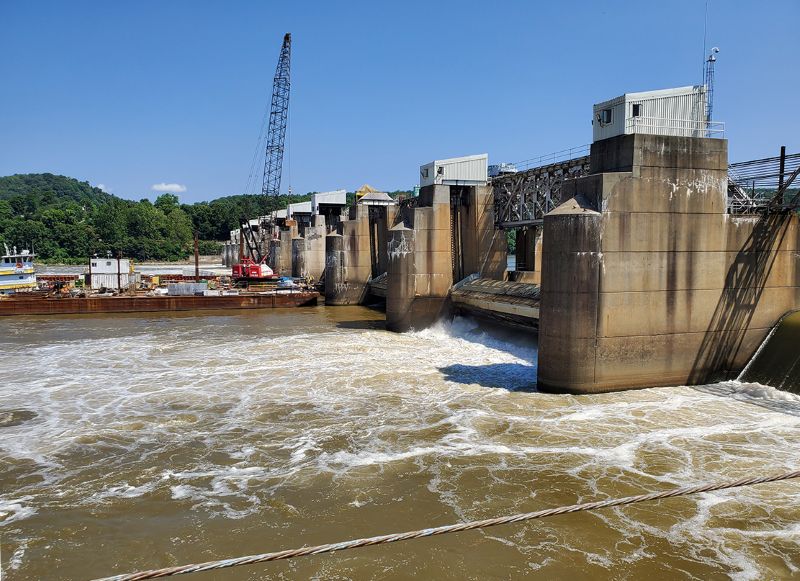
 Andrew Byrne, U.S. Army Corps of Engineers
This article is partially derived and excerpted from the National Academies of Sciences, Engineering, and Medicine’s Consensus Study Report Highlights: Innovative Materials in Water Resources Infrastructure: Opportunities for the Corps of Engineers.
The U.S. Army Corps of Engineers (USACE) administers the nation’s water resources infrastructure for navigation and flood risk management as part of its Civil Works Program. Maintaining, repairing, and modernizing these dams and other infrastructure can be demanding and costly because the assets and their components are aging, built at different times, and subject to the stresses of water environments and damage from vessel traffic.
Supported by its Engineer Research and Development Center (ERDC), USACE is addressing these challenges in part through the development, demonstration, and evaluation of innovative materials for use in water resources assets to shorten construction and repair periods, increase durability and maintenance intervals, and lower the life-cycle costs. Success in exploiting the potential for innovative materials and manufacturing processes will not only require continued technological advances but also deliberate and coordinated efforts to promote and incentivize their use when benefits are identified.
Study Commissioned
An independent committee convened by the National Academies of Sciences, Engineering, and Medicine reviewed the challenges facing USACE in maintaining and modernizing the nation’s water resources infrastructure, considered how innovative materials can support capabilities critical to meeting these challenges, and recommended strategies that USACE can pursue to further the development, demonstration, and deployment of promising materials. The results of this study—requested by Congress and commissioned by ERDC—are detailed in the committee’s consensus study report, Innovative Materials in Water Resources Infrastructure: Opportunities for the Corps of Engineers.
Focus Areas
The dams, locks, and levees that make up USACE’s inland navigation and flood risk management infrastructure are vital to commerce and the safety of communities. However, they are aging and in continuous need of maintenance, including repair and rehabilitation (Figure 1).
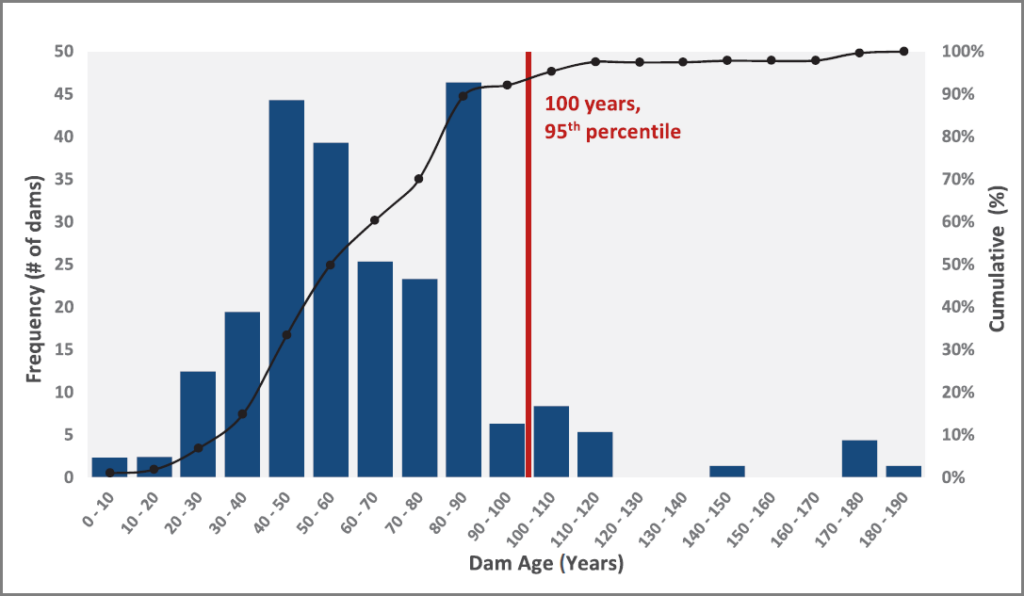
Because this infrastructure is essentially built out with few new or replacement facilities being added, the maintenance of existing assets to extend their service lives is an ongoing USACE responsibility that presents many opportunities for the use of innovative materials. The consensus study report therefore focuses on the application of innovative materials in inland navigation and flood risk management projects funded through USACE’s operations and maintenance (O&M) budgets. Because O&M projects can vary widely in scale, complexity, and risk, they also offer a range of opportunities for strategically using innovative materials and demonstrating their cost and performance characteristics.
The consensus study report also provides an in-depth review of the following three material types that stand out in their potential to confer early benefits for USACE navigation and flood risk management infrastructure if utilized more often:
- Fiber-reinforced polymer (FRP) composite materials;
- High-strength concrete and ultra-high-performance concrete; and
- Three-dimensional (3-D)–printed materials.
As presented to the committee, all three materials are of high interest to USACE and have been the subject of significant laboratory and—in some cases—demonstration and pilot testing. Among its advantages, FRP composite materials are strong and light, resistant to corrosion, and allow for more design flexibility compared with traditional steel (2). The advantages of high-strength concrete and ultra-high-performance concrete include high strength, durability, impact and abrasion resistance, and crack control (3). 3-D printing, which is used extensively for metal applications in the aerospace, automotive, and energy sectors, can be utilized to make customized replacement parts (4).
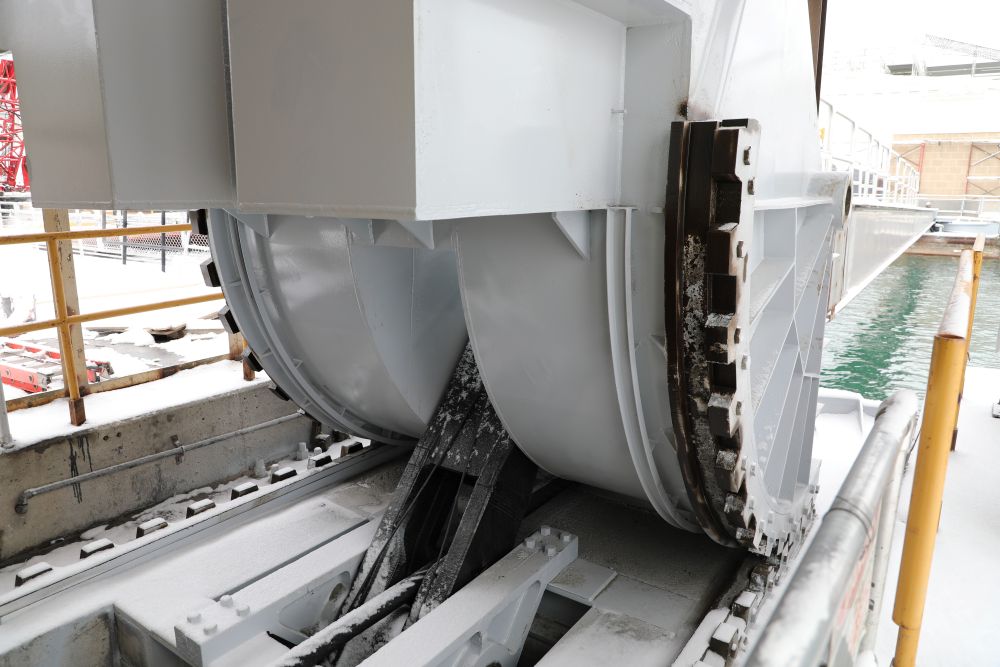 U.S. Army Corps of Engineers
Each material is also supported by a substantial amount of research and implementation evidence from other domains. For example, the U.S. Navy has a long history of utilizing advanced composites on ships.
In all cases, further research and development is needed for testing performance and formulating the protocols, specifications, and guidance to facilitate their application in water resources infrastructure. USACE is furthest along in developing such guidance for FRP composite materials, but long-term monitoring of performance is needed (5). The consensus study report also examines other kinds of innovative materials that offer benefits for use in USACE water resources infrastructure, such as advanced coatings and geosynthetics.
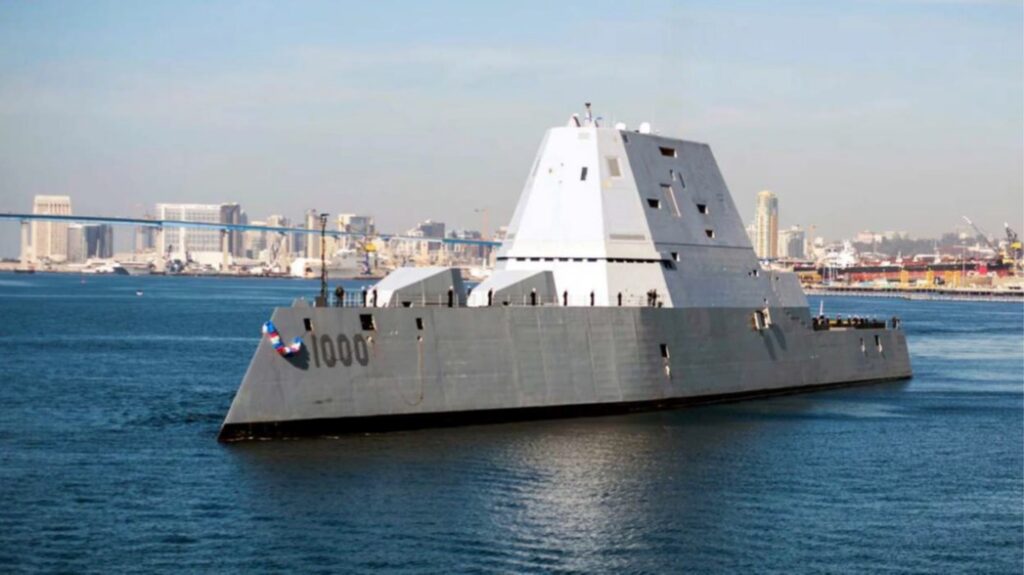 Petty Officer 3rd Class Emiline L. M. Senn, U.S. Navy, Public Domain
Impediments to Innovation
Additionally, the consensus study report describes numerous barriers to the use of innovative materials in water resources projects. These barriers include the following:
- An emphasis on minimizing initial budgetary outlays for projects. This can discourage the use of innovative materials that add to initial costs (though this is not always the case), even when they promise future savings in maintenance costs and extended service life.
- A lack of awareness of USACE’s institutional experience with innovative materials among field district personnel who plan and execute water resources projects.
- Inadequate workforce technical knowledge and skills about innovative materials and their application methods.
- Procurement constraints that favor reliance on conventional materials that conform to long-standing standards and specifications.
- Risk aversion by project planners and managers who may be reluctant to try an innovative material when they have more familiarity with the properties and performance characteristics of conventional materials, especially in the context of highly constrained budgets.
Many of these barriers are known to USACE and are the subject of deliberate efforts to overcome them in conjunction with ERDC’s commitment to materials engineering research, development, and technology transfer (5). For example, the consensus study report examines USACE leadership directives that compel project planners to consider FRP use as a potential alternative to steel for certain applications. USACE has also issued guidance on the importance of considering the cost and performance implications of materials over the life cycle of an asset to counter an overemphasis on initial cost. Formal and informal organizational structures within USACE, including centers of expertise and communities of practice, capture institutional experience with innovative materials, foster collaboration, and support the dissemination of best practices. USACE’s training programs for the use of FRP composite materials have been successful and may be models for other innovative materials.
While uses of innovative materials in past water resources infrastructure projects have helped reveal performance characteristics and inform practice, USACE does not have formal demonstration programs designed to monitor, evaluate, and document an innovative material’s advantages and disadvantages, provide performance data, and familiarize district personnel with a material’s attributes and implementation process. The consensus study report documents how such demonstration programs have been helpful for these purposes in other domains, including highways and bridges.
Recommendations
The consensus study report provides a series of recommendations aimed at building even more capacity and momentum for USACE’s use of innovative materials in water resources infrastructure. A particular emphasis is placed on prioritizing the use of innovative materials in O&M projects, which present opportunities for early implementation in relatively small-scale, low-cost, and limited-risk situations. However, such an emphasis should not preclude the use of innovative materials in capital investment projects. Indeed, O&M applications should build experience for use in major rehabilitation and new construction projects.
The recommendations, which are directed mainly to USACE but also to Congress in some cases, call for the following actions:
- Prioritize, facilitate, and incentivize the use of innovative materials, including by appointing an advocate for innovative materials at USACE headquarters who will coordinate and champion the use of innovative materials in the Civil Works Program.
- Monitor, evaluate, and demonstrate the use of innovative materials, in particular by establishing a program dedicated to funding demonstration projects for the use of innovative materials in water resources infrastructure and ensuring that projects are planned and designed with long-term condition and performance monitoring, evaluation, and reporting.
- Guide, inform, educate, and train USACE personnel on the use of innovative materials, including by harmonizing and orienting the existing body of standards and guidance applicable to the use, qualification, and acceptance of innovative materials in water resources infrastructure; leveraging the capabilities of existing collaboration networks, such as communities of practice and centers of expertise; and expanding technical and professional courses supportive of the use of innovative materials in water resources infrastructure.
These recommendations offer practical strategies for testing, demonstrating, and scaling up new materials. They also outline a clear path for USACE to strengthen infrastructure performance and reliability of the nation’s waterways.