
 Seattle DOT, Flickr, CC BY-NC 2.0
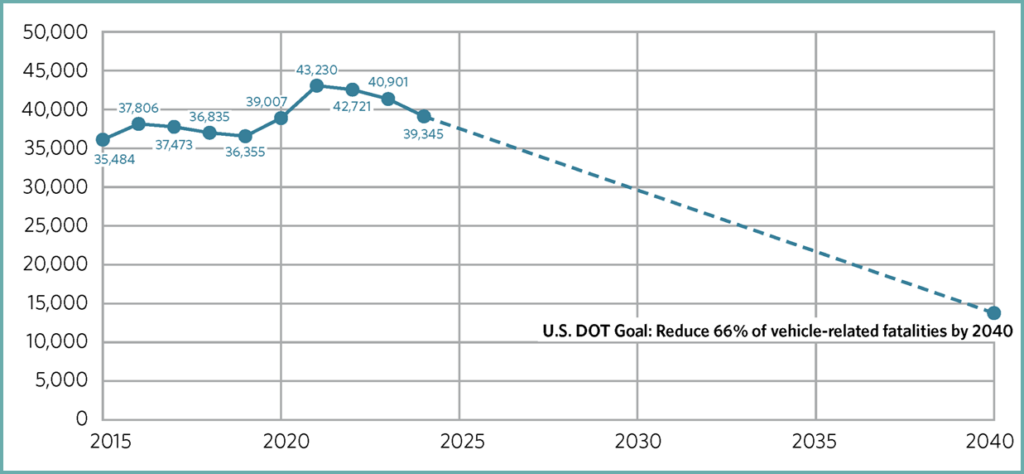
After years of troubling spikes in traffic fatalities across the United States, recent data show a decline in the number of deaths and serious injuries (Figure 1). While encouraging, the pace of improvement is not fast enough to meet the U.S. Department of Transportation’s ambitious goal of eliminating 66 percent of vehicle-related fatalities by 2040 (1). Achieving this target will require a major shift in how agencies at all levels design transportation systems.
One promising intervention gaining traction is the Safe System Approach (SSA). Unlike traditional methods, which try to design roadways to eliminate any possibility of a crash occurring, the SSA acknowledges that human error is inevitable and emphasizes designing transportation systems that minimize the resulting harm to road users.
What Sets the Safe System Approach Apart?
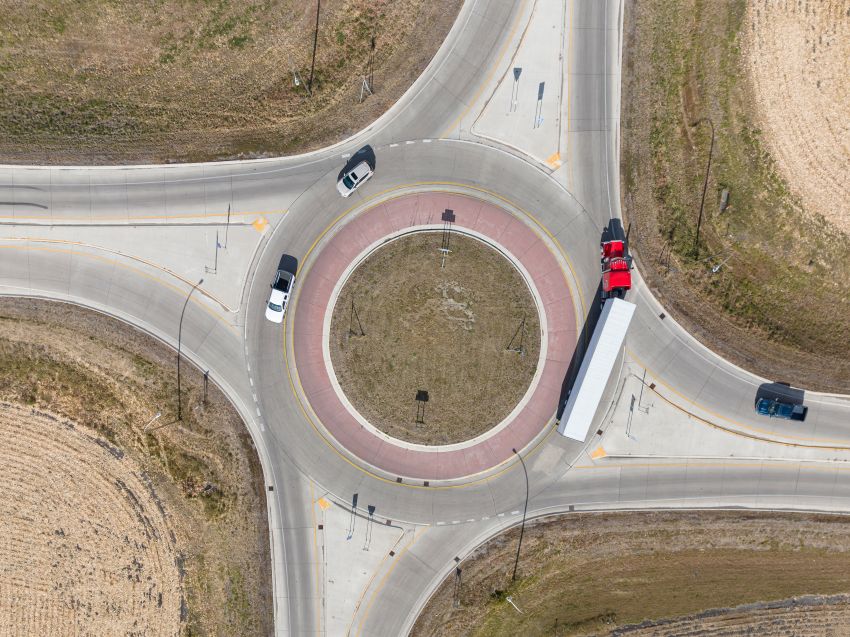
At the heart of the SSA is the premise that people make mistakes, but the consequences need not be fatal. Instead of accepting that human behavior will always lead to severe crashes, the focus is on making changes to the transportation environment and operations that help reduce and prevent injuries from those mistakes. Roundabouts are an example of infrastructure that incorporates this approach. By compelling drivers to slow down and pay attention, these systematically altered intersections account for human failure, resulting in far fewer fatal crashes than signalized intersections (2).
The SSA framework is organized around the following five elements:
- Safer people,
- Safer vehicles,
- Safer speeds,
- Safer roads, and
- Post-crash care.
This framework requires a shared commitment from law enforcement and emergency medical services, transportation planners, engineers, state and local departments of transportation (DOTs), and public works professionals, as well as buy-in from the public.
Historically, safety efforts in road planning and design have focused on infrastructure improvements to address high-crash locations. The SSA begins similarly, by defining problem areas in the transportation system. But it then puts these identified concerns into holistic and systemic context, introducing solutions for added redundancy. In the roundabout example, for instance, a median island reduces cross-over crashes (part of the safer roads element) and lowers speeds (safer speeds). At the same time, adding a roundabout to a community often includes public education campaigns (safer people). If one element of the system fails, other elements can still prevent deaths and serious injuries.
 Courtesy of HDR
Global Success and U.S. Momentum
This paradigm shift already is saving lives around the world. Australia, the Netherlands, Spain, and Sweden were among the countries at the forefront of SSA implementation in the 1990s and have recorded dramatic reductions in traffic fatalities. Between 1990 and 2017, a period during which U.S. traffic deaths dropped by 16 percent, traffic deaths fell by 47 percent in Australia, 55 percent in the Netherlands, 67 percent in Sweden, and 80 percent in Spain (3).
In the United States, the SSA is still a relatively new concept, but momentum is building. Through the federal Safe Streets and Roads for All Program, thousands of U.S. communities have developed safety action plans aligned with SSA principles. These plans provide communities with a prioritized list of SSA-aligned projects that address systemic risk factors. They also educate the public on how safer measures can be implemented locally.
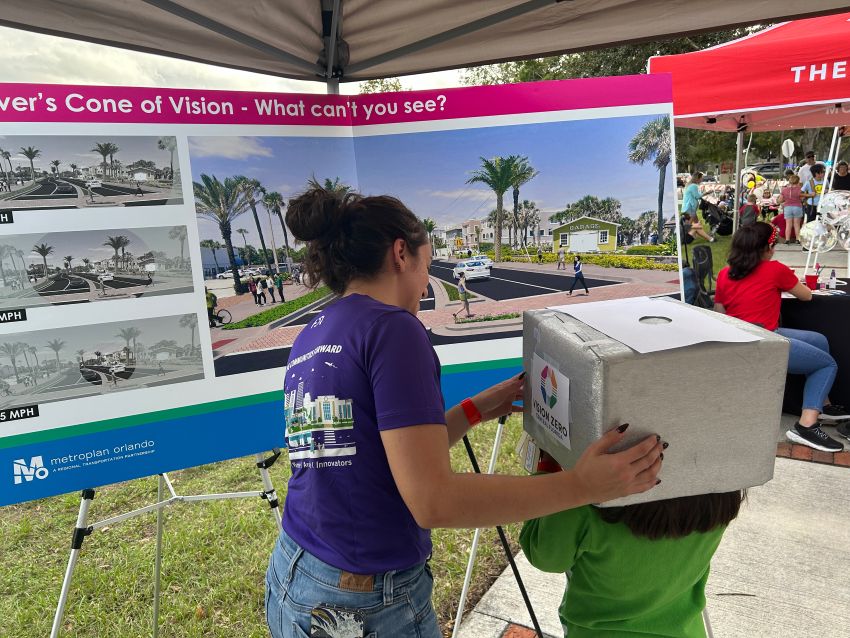
State DOTs are integrating the SSA into the development of Strategic Highway Safety Plans and Vulnerable Road User Safety Assessments in partnership with other transportation agencies. City and local transportation agencies also are adopting and embedding SSA principles into their roadway projects. For example, Seminole County in Central Florida and six cities within it collaborated to adopt individual Vision Zero Safety Action Plans in partnership with MetroPlan Orlando, the regional metropolitan planning organization. Similarly, Kentucky’s two largest cities—Lexington and Louisville—have integrated the SSA into their safety action plans to reduce deaths and serious injuries.
 Courtesy of HDR
Putting Plans into Practice
Transportation agencies now are at a crucial juncture: moving from planning and prioritizing to actively implementing safety improvements on roadways. The process begins with leaders who see the SSA’s value. Minnesota, where transportation leaders have embraced the approach, exemplifies how these safety principles can be incorporated statewide. In June 2025, Minnesota DOT published its first SSA implementation plan, which declared that “deaths and serious injuries are unacceptable” and pledged to reverse recent trends in injuries and deaths statewide (4).
Because state DOTs shape statewide transportation actions through policies, technical assistance, and funding, Minnesota DOT’s dedication to the SSA likely will ripple throughout local agencies and governments. Key to this commitment is the acknowledgment by leaders that some changes may be unpopular internally or with the public. For example, Minnesota DOT has declared that it will prioritize the safety of all road users and safer speeds over increasing capacity (e.g., widening or building new roads). In essence, getting people to their destination safely henceforth will take precedence over getting them there quickly.
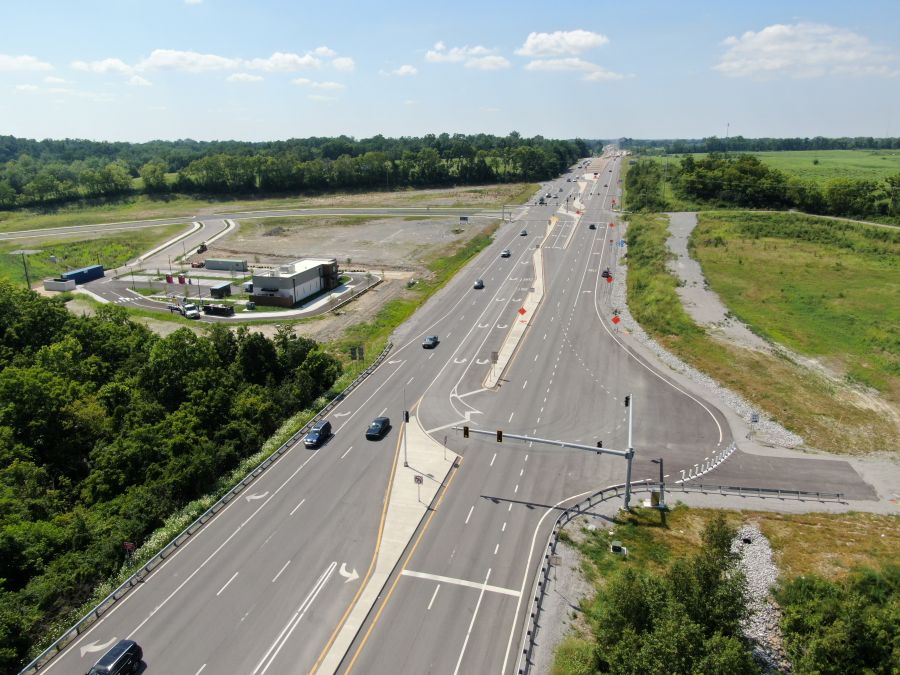
Minnesota DOT uses J-turns—safer U-turn movements that replace traditional left turns—to illustrate this shift in priorities. While J-turns may cost more to build and maintain and can carry the perception of increased delay, Minnesota DOT has pushed for expanding their use because they reduce fatalities by 70 percent (5). Providing education on these tradeoffs and reinforcing the need for—and benefits of—such changes will be an ongoing effort by Minnesota DOT leadership as the agency undertakes this dramatic shift.
 Courtesy of HDR
Robust and intentional change management is one of several key strategies and actions that Minnesota DOT has adopted. These can be used by leaders at other agencies as they consider their own shifts toward SSA principles and include the following:
- Adopt a change-management model that includes an annual review process to track and review continued progress toward establishing a traffic-safety culture.
- Define and advocate for “safer design first” policies, programs, and projects so that default choices favor design elements that prioritize safety.
- Develop a speed-management guide to summarize effective practices and strategies for setting speed limits based on roadway type and land-use context. The FHWA’s Safe System Approach for Speed Management offers a good starting point.
- Appoint district or division SSA leaders and a central office group to support implementation.
- Establish an SSA training program that includes a road show to educate staff across districts, as well as a technical course for practitioners focused on translating SSA principles into action at the project level.
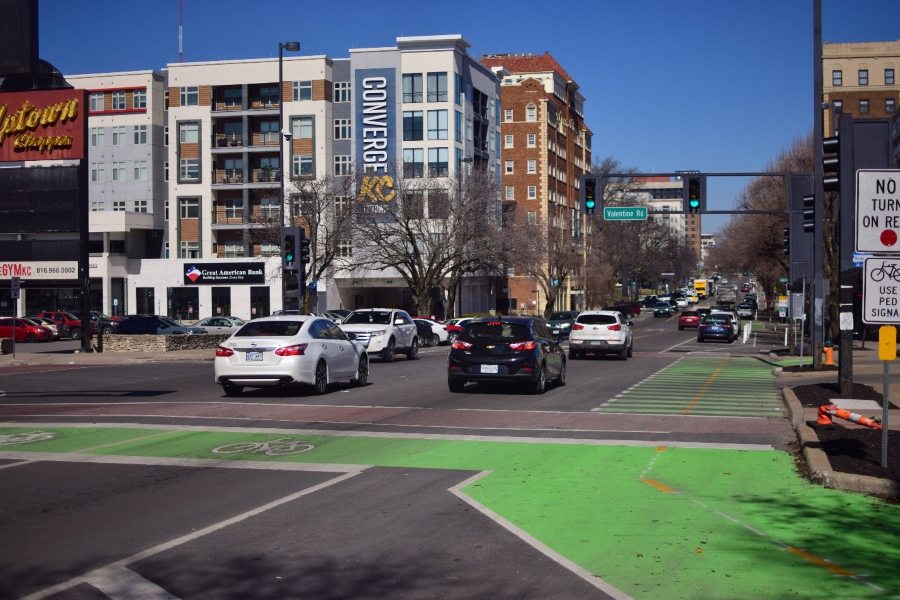
Other agencies across the United States are recognizing the effectiveness and importance of the SSA. For example, following the adoption of its Vision Zero Action Plan, Kansas City, Missouri, enacted an ordinance requiring a road diet—a roadway reconfiguration that reduces the number of travel lanes to accommodate walkways or other safety infrastructure—on every pavement resurfacing project. Similar to Minnesota DOT’s “safer design first” orientation, this policy already has reshaped one of Missouri’s top crash corridors for vulnerable road users. For little more than the cost of the resurfacing, a two-way bike lane and expanded pedestrian crossings were added to the roadway design to enhance safety for all users without increasing congestion.
 Courtesy of HDR
To create consistent guidance on setting speed limits throughout the project development process, the Colorado DOT developed road design guidelines for urban roadways across the state. These guidelines provide practitioners with clear design expectations for targeted speeds, user types, and mobility goals.
Prioritizing staff training, New Jersey and Missouri DOTs have organized workshops and summits to bring planners, engineers, public works professionals, metropolitan planning organizations, law enforcement, and emergency medical services together to build a shared understanding of the SSA. Missouri further leveraged statewide workshops to update its Vulnerable Road User Safety Assessment and Strategic Highway Safety Plan. Using these workshops to learn stakeholders’ challenges and educate them about the SSA framework, the state DOT and participants identified key safety issues and countermeasures, as well as how their solutions aligned with the SSA.
Developing a Safety-First Mindset
 Jay Aber
Even with strong leadership in some areas, major challenges remain to institutionalizing the SSA across the national transportation system. The good news is that progress is being made. And practitioners at all levels can take steps to make a difference.
A safety mindset starts with small but impactful actions that shift thinking toward a shared responsibility for safety—road designers to road users—rather than relying on large-scale infrastructure changes. Such actions include the following:
- Partner and collaborate. Start by building relationships with community groups and organizations such as law enforcement, public health agencies, and schools. These partnerships can help integrate SSA principles into everyday decision making.
- Consider quick wins. Simple, low-cost countermeasures can have an immediate impact on safety. Adding rumble strips and reflective pavement markings, for example, reduces road departure crashes and improves visibility at intersections. Upgrading to brighter street lighting at crosswalks and rural intersections is another effective solution that requires no major redesigns.
- Support policy and behavior changes. Adopt laws, programs, and initiatives that are proven to enhance safety. Primary seatbelt laws save lives. Safe speed initiatives—such as adding speed cameras, as well as electronic speed-limit and vehicle-feedback signs—can help reduce speeds and crash severity.
- Champion safety technology. Vehicle safety technology such as back-up cameras, lane assist systems, blind-spot detection, and automated emergency braking can be incorporated into agency fleets and rental vehicle policies to reduce crash risk.
- Engage the community. Public education campaigns focused on seat belt usage, impaired driving, and speeding will ideally emphasize a shared responsibly rather than placing blame. Furthermore, local crash data can be used to tailor messages that resonate with the public and create meaningful safety conversations.
These measures show that the SSA is a practical, collaborative framework for action rather than an overwhelming technical overhaul. Every project ideally could be treated as a safety initiative. By embedding these SSA-aligned steps into everyday decisions, any transportation agency—regardless of size—can spearhead meaningful changes that save lives and become a champion of safer roads.