

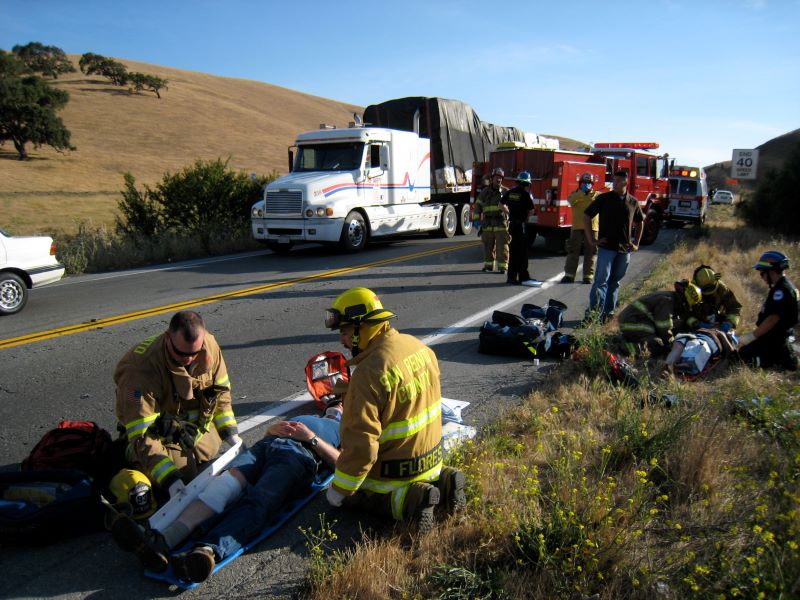
 Jason Burwen, Flickr, CC BY-SA 2.0
With the U.S. Department of Transportation’s goal of zero fatalities and serious injuries for the United States (1), it is important to prioritize road safety in all disciplines, modes, and geographical areas. Reaching zero is a shared responsibility that will take everyone’s commitment. However, with a fatality rate of 1.5 times that of urban areas, rural regions are disproportionately affected by this public health crisis (2). In dealing with unique characteristics, risks, and challenges—such as narrow lanes, uncontrolled intersections, and larger geographical jurisdictions—rural practitioners require rural-specific guidance to assist them in proactively implementing strategies for creating a safe rural road system.
The Behavioral Traffic Safety Cooperative Research Program (BTSCRP) funded BTSCRP Project BTS-15 to develop a toolkit for highway safety partners involved with rural road safety. The toolkit is designed to aid them in reducing the frequency and severity of motor vehicle crashes on roads in rural and Tribal areas.
Chaired by Eric Fitzsimmons of Kansas State University, the BTSCRP Project BTS-15 panel of subject matter experts selected the Western Transportation Institute and the Center for Health and Safety Culture at Montana State University, as well as the University of Iowa and EBP US—the U.S. arm of a global consulting firm—to complete the project. Researchers started by defining rural roads, completing a rural safety data analysis, conducting a literature review of rural travel behavioral practices, and documenting nine rural case examples. This information is presented in BTSCRP Web-Only Document 4: Highway Safety Behavioral Strategies for Rural Areas.
In addition, researchers developed BTSCRP Research Report 8: Highway Safety Behavioral Strategies for Rural and Tribal Areas: A Guide for use by state highway safety offices, state and local departments of transportation, county departments of public works, Tribal authorities, and other parties concerned with improving traffic safety in rural areas. The guide discusses the following:
- Safe System Approach
- How behavioral strategies work
- Process for improving safety on rural roads
- How to identify, select, and adapt countermeasures and strategies for rural areas
- Ways to grow evaluative thinking
The guide also includes supporting material such as an instructional video on logic models.