

 N509FZ, Wikimedia, CC-BY-SA 4.0
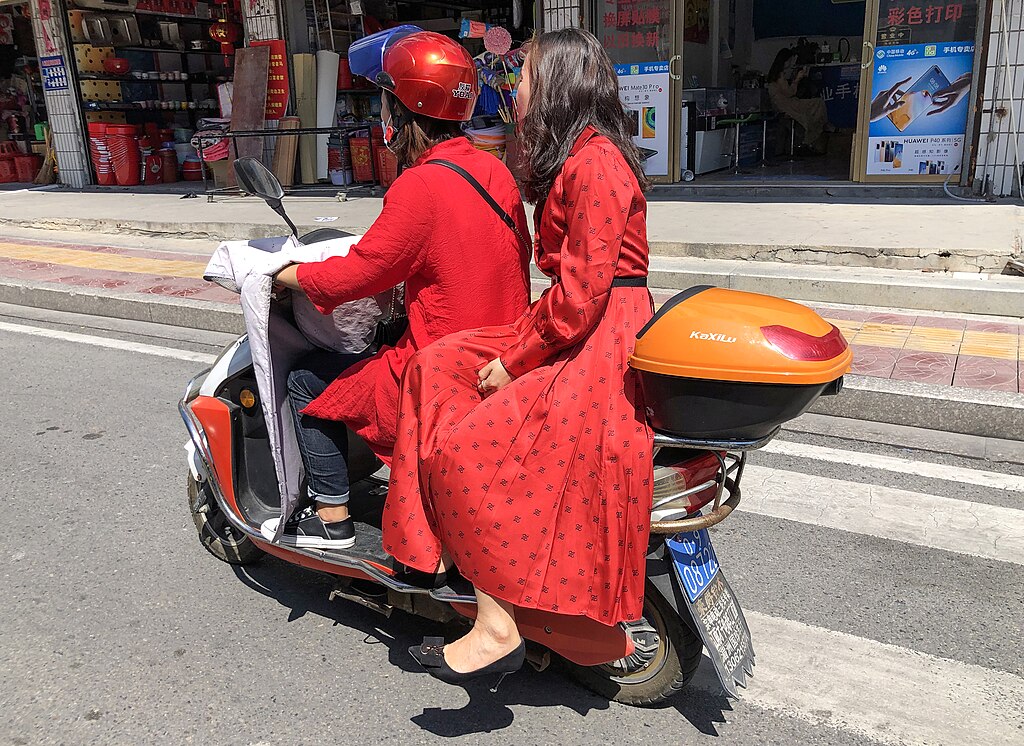
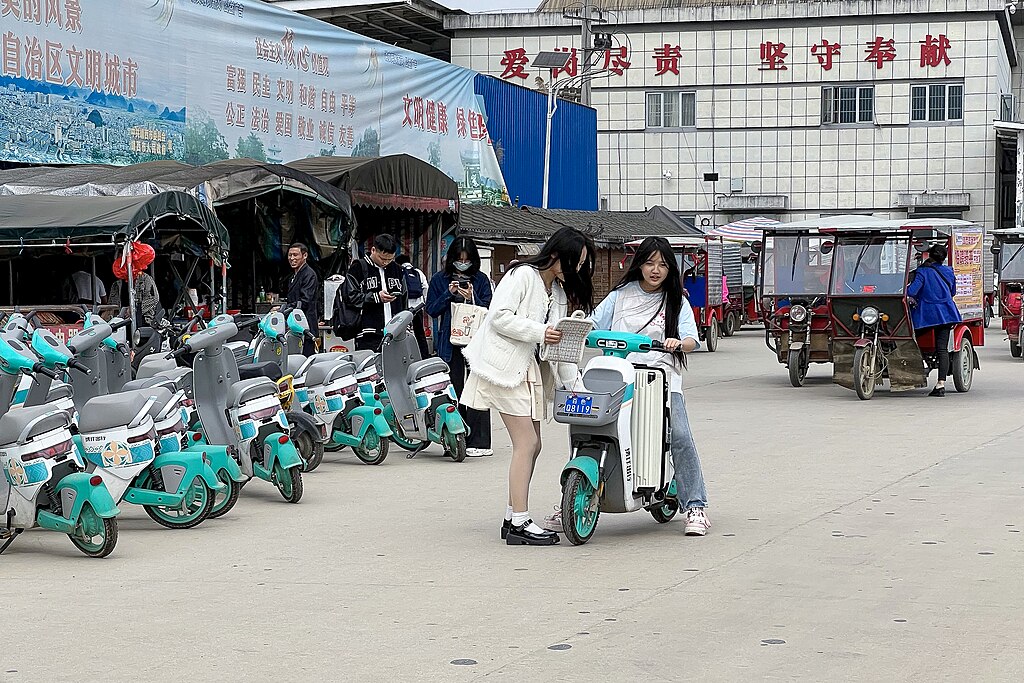
Whether delivering food or whisking people to work, shopping, and recreation, electric bikes have become a common conveyance in cities worldwide. Despite the increasing popularity of e-bikes, however, knowledge about their use patterns and effect on other transportation modes remains limited. A 2024 study offers insights—illuminating not only a shift in daily travel habits but also associated benefits. Among them: reduced congestion and car dependence, as well as enhanced mobility for older adults.
The study, published in Transportation Research Part D: Transport and Environment, examined dual-mode households in the Jiading District of Shanghai, China, that owned cars and e-bikes. (Scooter-style models are favored in China, while pedal-assisted versions are prevalent in Europe and North America.) The research team chose the Jiading District because of the high modal share that e-bikes account for: 27 percent, second only to private cars at 33 percent. With its population of 1.8 million and high density, including compact shopping areas, the district also represents a microcosm of urban transportation challenges, such as parking and traffic.
Analyzing data from the Household Travel Survey, the researchers compared the basic travel behavior of dual-mode owners with those possessing only a car or an e-bike. They also employed machine learning to pinpoint trip distances where e-bikes are most likely to influence travel-mode choices.
Highlights of their findings include the following:
- Dual-mode households can reduce their car use by up to 19 percent, compared with those that rely solely on a car or an e-bike.
- Increased car choice begins at 3 miles (5 kilometers) and 0.9 miles (1.5 kilometers) for dual-vehicle and car-only owners.
- E-bikes encourage a greater variety of noncommuting activities for car owners.
- E-bikes facilitate commuting while also enhancing travel autonomy for older adults, who can cover longer distances without the physical exertion of pedaling a conventional bike.
- E-bikes have a minor negative effect on public transportation mode share.
“Dual-mode owners enjoy enhanced autonomy for local journeys, facilitated by e-bikes, while exclusive car owners have reported less frequency for those,” the study concluded.
 N509FZ, Wikimedia, CC-BY-SA 4.0
The findings, reports Momentum magazine, could help transportation planners and policy makers worldwide encourage broader adoption of cycling as a key part of urban mobility. Beyond their maneuverability and emission-free engines, e-bikes promote activities—such as visiting friends or grocery shopping—that might otherwise require a car. “This flexibility is a game-changer,” notes Momentum, “especially in a district like Jiading, where narrow streets and scarce parking make cars less practical for local trips.”
While e-bikes present a viable complement to cars, their growing prevalence has generated a different set of transportation challenges. Safety and traffic concerns have prompted restrictions and even bans in cities from Beijing to New York, for example. Injuries—which have increased along with e-bike use—are typically more serious than with slower, nonmotorized bikes, report researchers in a 2020 Injury Prevention article.
Transportation agencies are working to improve safety while supporting expanding e-bike demand. Minneapolis, Minnesota, for example, integrates e-bikes with the public transit system, permitting them on buses and light rail, while Seattle, Washington, redesigned streets to accommodate electric and traditional bikes.