
 Jane Kratochvil, New York City DOT, Flickr, CC BY-NC-ND 2,0
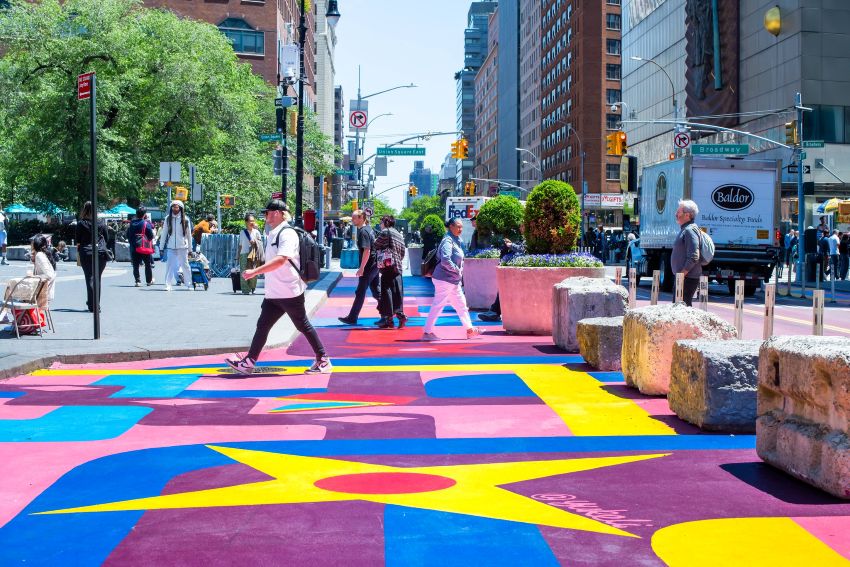
Like many cities, New York has seen a surge in bicycle ridership over the past two decades and now is home to North America’s largest bike network. These bikeways support tens of thousands of daily commuters, as well as the millions of residents who live within a mile of them. To make streets safer for cyclists and pedestrians, the New York City Department of Transportation (DOT) is redesigning select high-crash intersections. Plans call for incorporating granite blocks, planters, and other physical structures that would prevent parking near corners and increase the visibility of road users and vehicles—an approach known as hardened daylighting.
In announcing the initiative this past June, New York City DOT officials noted that 50 percent of all traffic fatalities occur in intersections. “Using barriers to clear space at the intersection will help ensure that pedestrians, cyclists, and turning vehicles can see each other and enhance safety,” explained New York City DOT Commissioner Ydanis Rodriguez, adding that the new design would begin rolling out at a limited number of locations later this year. Initial sites—four of which lie along Ocean Avenue in Brooklyn—were selected based on criteria that included intersections on new or existing conventional bike lanes with a history of turning crashes.
Daylighting has become an increasingly popular tool for cities striving to achieve Vision Zero goals of eliminating all traffic fatalities and severe injuries. New York City, which logs an estimated 620,000 cycling trips on any given day, has been at the forefront of hardened daylighting. A January 2025 New York City DOT analysis of daylighting and street safety estimated that the agency installed physical interventions ranging from concrete islands to bike racks, plastic delineators, and bollards at nearly 300 intersections last year.
That study found safety benefits associated with hardened daylighting. By contrast, daylighting with signs alone showed no significant safety benefit. The study also found that universal daylighting—exemplified by intersections with fire hydrant zones adjacent to crosswalks—may not produce the anticipated benefits and, in some cases, adversely affect safety.
Despite hardened daylighting’s demonstrated effects, New York City DOT will monitor the redesigned intersections for efficacy and safety. Trends appear to be headed in a positive direction. New York Police Department figures show that collisions involving all vehicles—including bicycles and motorized two-wheelers—declined from 39,350 to 35,110 over the past year, amNY.com reported. Whether hardened daylighting will accelerate such safety improvements remains to be seen. But flower-filled planters and strategically placed granite perches already are making streetscapes more appealing to pedestrians, cyclists, and drivers alike.