
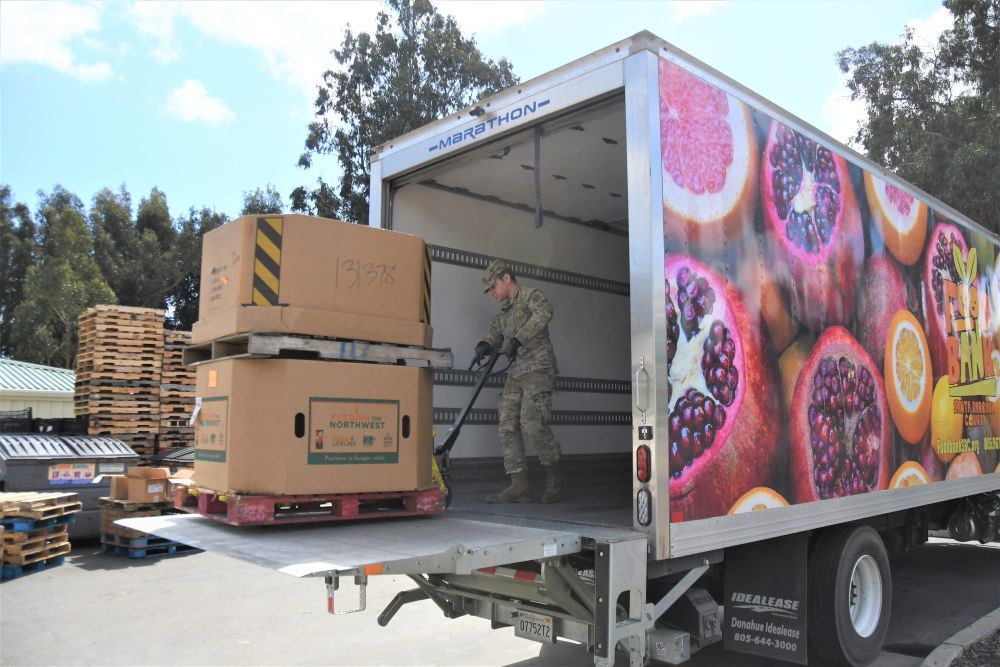
 Captain Jason Sweeney, California National Guard, Flickr, CC BY 2.0
The Texas A&M Transportation Institute recently concluded a comprehensive study to address the challenges state agencies face in managing regulatory relief for overweight commercial motor vehicles transporting supplies during emergencies. The research aimed to establish a unified approach to emergency management, focusing on the definitions of emergency and emergency commodities, identifying successful practices, and formulating a decision framework tailored to different emergency scenarios.
Conducted under National Cooperative Highway Research Program (NCHRP) Project 23-13(05), “Regulatory Relief of Commercial Vehicle Weight Requirements for Emergency Transportation of Critical Commodities,” the study and resulting guide highlighted the importance of streamlining special permits in emergency situations. This need became apparent during the COVID-19 pandemic, when rapid changes in commerce increased demand on the freight community to deliver emergency supplies and goods amid uncertainty. The study noted the challenges posed by the lack of uniformity in permit regulations—between neighboring states and within states that have multiple entities responsible for infrastructure ownership, operation, and local oversight. The research provides solutions that are easy to implement and flexible enough to adapt to different policies, processes, and practices across various state permitting offices.
Based on a literature review, interviews with state truck-permitting offices, and three stakeholder workshops, the study yielded several key findings. First, it highlighted significant differences among states in issuing permits and enforcing regulations during emergencies. Second, it uncovered confusion regarding the types of roads and safety requirements specified in emergency orders, particularly for carriers not regularly involved in such situations. Additionally, the research underscored the critical need for standardized communication processes and a clear distinction between divisible and nondivisible loads.
The study culminated in the creation of a comprehensive guide—NCHRP Research Report 1115: Transporting Freight in Emergencies: A Guide on Special Permits and Weight Requirements—that integrates best practices and essential resources. Primarily based on feedback from end users, the guide aims to enhance state permitting offices’ sense of ownership and the likelihood of implementation. It includes a detailed contact list of state truck permitting agencies, an example of a regional memorandum of understanding, a process to create emergency commodity lists, and pre- and post-disaster process guidelines. The guide also emphasizes streamlined communication and offers both high-level guidance and practical tips for practitioners. The project’s conduct of research report is available as NCHRP Web-Only Document 397 and explores specific regulatory details and research findings.
This research represents a major advancement in the field of special permitting and emergency management, particularly in the context of freight transportation and logistics. It provides a clear and effective pathway for agencies to manage emergency situations, ensuring the efficient and safe transportation of vital commodities in times of crisis. The study not only aids in enhancing current emergency response mechanisms but also sets a precedent for future research and policy development in this critical area.