
 Sam Javanrouh, Flickr, CC BY-NC 2.0
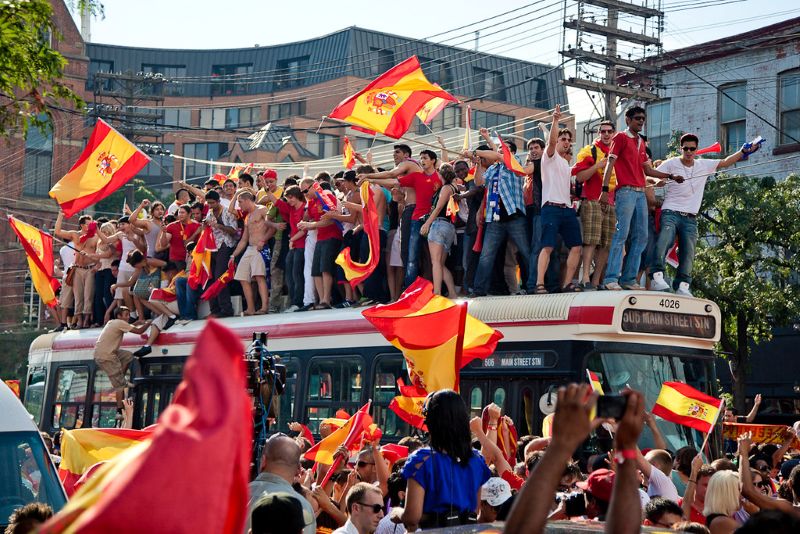
Take millions of domestic and international travelers. Add four dozen top men’s national soccer teams vying in 104 matches. Now, spread those games across 16 venues in the United States, Canada, and Mexico. The world’s largest sporting event—the 2026 FIFA World Cup—kicks off this June in North America, and transportation agencies play a key role in the 39-day tournament’s success. The goal, as Kansas City, Missouri, organizers put it: Ensure a safe and seamless experience for the influx of fans, athletes, and conventional tourists while also meeting the day-to-day needs of residents.
That’s a tall order, especially in sprawling, car-dependent metropolitan areas such as Dallas, Texas, where nine World Cup matches will take place, or those with aging infrastructure and strained transit systems. As Phillip Eng, General Manager of the Massachusetts Bay Transportation Authority in Boston, site of seven games, told a local news outlet, “none of us want transportation to be the story when the World Cup is here.”
Local, regional, state, and national agencies have teamed up to accommodate the anticipated surge of World Cup travelers—many from countries with more robust public transportation and rail networks than they may encounter in North America. Beefing up transit systems has been a prime focus. Monterrey and Guadalajara in Mexico, for example, are rushing to complete new light-rail lines to handle the influx. Solutions being developed or already underway for the June 11–July 19 competition include the following:
- Atlanta, Georgia—The city’s public transit system, which carried more than one million people per day during the 1996 Summer Olympics, already can move visitors directly from airport to Mercedes–Benz Stadium for eight World Cup matches. Planned transportation upgrades include the launch of the region’s first bus rapid transit service and an improved fare collection system that will let riders tap a credit card or use their smartphone. That should make it easier for international visitors to get around—as will announcements in their home languages. Other innovations include real-time corridor monitoring and lidar pedestrian sensors that provide crowd-density analytics around the stadium. An autonomous shuttlebus pilot also will debut.
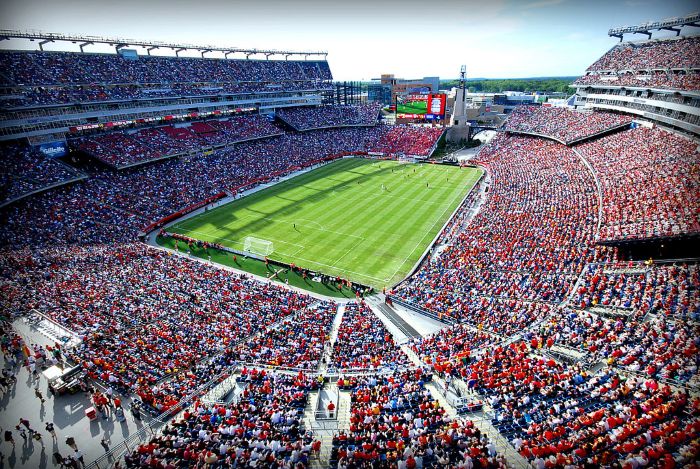
- Boston—An express train will whisk ticketholders to the newly renovated Gillette Stadium station in Foxborough, 36 miles southwest of the city, for seven World Cup matches. Upgrades include a fully accessible platform with increased capacity.
 Joscarfas, Flickr, CC BY-NC-SA 2.0
- Dallas—North Texas, with nine matches (the most of any site), is leasing extra locomotives and cars for its light rail system and operating a “bus bridge”—a fleet of chartered buses—to relieve crowding on trains to and from AT&T Stadium in Arlington, roughly 20 miles west of Dallas. The city also is considering converting some streets to pedestrian only. Several jurisdictions have deployed AI-powered systems to monitor traffic and optimize signal timing along key roadways.
- New York City—A million fans are expected for eight World Cup matches, including the championship game, at the MetLife Stadium (aka New York/New Jersey Stadium) in East Rutherford, New Jersey—about 11 miles northwest of the city. New Jersey Transit (NJ Transit) will operate expanded rail service throughout the region and is implementing a new, seven-mile transitway between Secaucus Junction Station and MetLife Stadium with match-day service for ticketholders only. In addition, new terminals and state-of-the-art shuttles will greet fans arriving at LaGuardia Airport in Queens, New York, and Newark Liberty International Airport in Newark, New Jersey.
- Kansas City, Missouri—Host of six World Cup matches and several team base camps, including that of defending champion Argentina, the city has extended the downtown streetcar line. It will also use leased buses to convey fans to Arrowhead Stadium—which lacks public transit. Direct motorcoach bus service will run approximately every 15 minutes between the airport and downtown, as well as along regular routes to Lawrence, Kansas, and 14 other regional sites, for the World Cup’s duration. In addition, a match-day shuttle exclusively for ticketholders will operate from four park-and-ride lots. The planning effort, which involved 50 local, state, and national agencies, has included running simulations of high-traffic game days. The organizing committee tapped Julie Lorenz, former Kansas Department of Transportation (DOT) secretary and past TRB Executive Committee member, to serve as a senior transportation adviser.
Courtesy of KC2026
- Seattle, Washington—Transportation agencies have taken a collaborative approach toward conveying the majority of an anticipated 750,000 visitors to six World Cup matches by some means other than by car. Lumen Field lies about one mile from the city’s center, putting it within easy walking distance of many hotels. And a six-mile temporary bike line—a signed route that connects key destinations throughout the city to the stadium—debuted in 2025, which advocates hope will expand from a pilot to a permanent network of routes. Expanded regional bus and ferry service, as well as a network of accessible vans, should help ease congestion, as will Seattle DOT’s recently announced pause in roadway construction during the World Cup. Planners also have teamed up with their counterparts in Vancouver, British Columbia, Canada, host of seven matches, to discuss potential options for expanding rail and bus service between the two host cities and pre-vetting passengers to cut wait times at the border crossing.
Conveying soccer fans, players, and residents safely and efficiently is only part of a long-term strategy to transform mobility. FIFA estimates that the tournament’s immediate benefits will include generating $30.5 billion in gross revenue and 185,000 jobs in the United States. However, cities, counties, and states view the 2026 World Cup as a way to showcase their regions, spur economic development, and build transportation systems that will support growing populations and travel demand. And they are investing substantial time, money, and political capital to design and improve infrastructure.
Those efforts got a major boost in early March, when Congress approved—and the U.S. Department of Transportation made available—nearly $100.3 million to help the 11 domestic host cities cover public transit operating expenses during the event. This investment is “about more than just moving people,” said Representative Sharice Davids, whose Kansas district is largely part of the Kansas City metropolitan area. “It’s about supporting local communities, strengthening transit systems for generations to come, and making sure this historic tournament leaves a lasting benefit long after the final whistle.”
Human Trafficking Prevention Efforts
 Oregon DOT. Flickr, CC BY 4.0
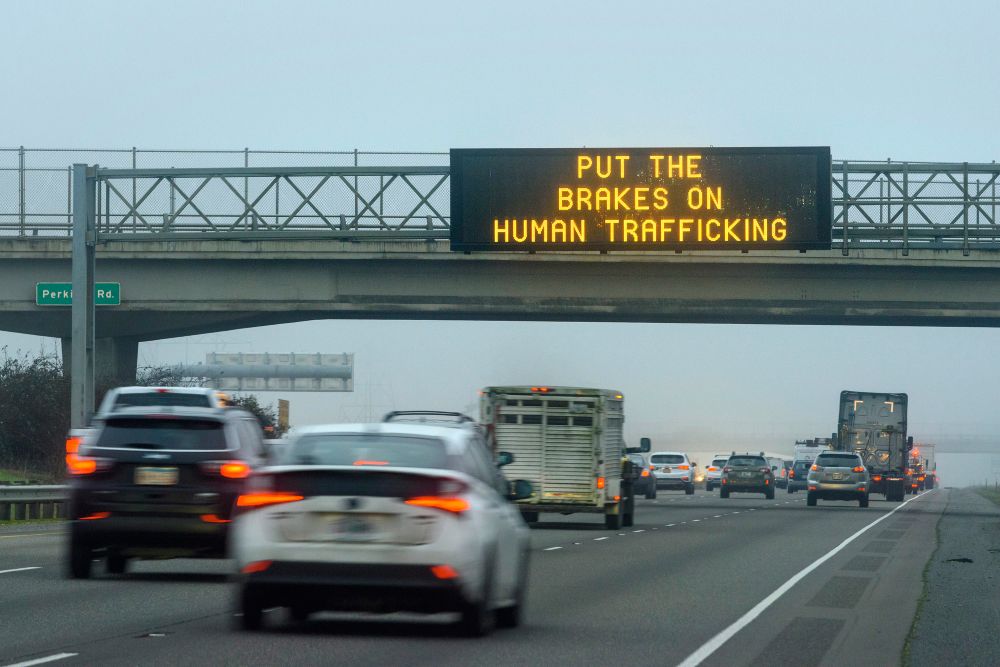
Along with prioritizing safety during the 2026 FIFA World Cup, U.S. host cities and transportation authorities are stepping up efforts to detect and deter sex and labor trafficking. Seattle, Washington, for example, has partnered with a local nonprofit to provide free training for transportation, hotel, and other public-facing employees to recognize and report human trafficking. New Jersey Transit’s Safe Passage initiative includes pop-up campaigns on high-traffic dates and enhanced digital and mobile mechanisms to make it easier for international visitors to report concerns. And Southeastern Pennsylvania Transportation Authority customer service ambassadors will receive special training in human trafficking awareness in advance of the World Cup matches in Philadelphia, reported Marissa Balanda, Pennsylvania Department of Transportation deputy policy director at a 2026 TRB Annual Meeting workshop on preparing transportation systems for large-scale events. “This isn’t about saving anyone,” underscored workshop panelist Shamere McKenzie, CEO of the nonprofit Sun Gate Foundation, which cares and advocates for human trafficking survivors like herself. “It’s about building systems that make exploitation harder to happen [and prioritizing] how well people are protected along the way.”